

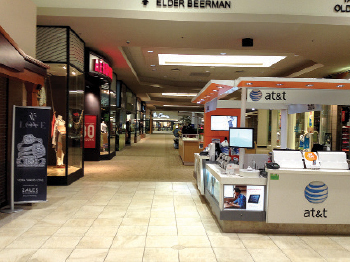
Well-lit and wide walking route free of obstacles.
Regardless of residential or work locations, walking can be done in a variety of venues. However, many neighborhood environment factors, such as street layout, sidewalk conditions, proximity of desirable destinations, perceived safety from traffic, and crime, all influence walking-related physical activity (Rosenberg, Huang, Simonovich, & Belza, 2013; Saelens & Handy, 2008; Van Cauwenberg et al., 2011). These factors associated with neighborhood walkability are important for all Americans, but especially for many midlife and older adults with physical or cognitive disabilities (Nagel, Carlson, Bosworth, & Michael, 2008; Prohaska et al., 2009; Satariano et al., 2010). Although neighborhoods can be designed to be walkable and, therefore, promote walking (Belza et al., 2004; Rosenberg, Bombardier, Hoffman, & Belza, 2011), external conditions, such as extreme temperatures and inclement weather, may negatively influence walking and increase safety hazards (Rosenberg et al., 2013). Mall walking programs can address many of these barriers, as noted in Table 1, which may largely account for findings indicating that after neighborhoods, shopping malls (“mall walking”) are the second most frequently used venue for walking (Eyler, Brownson, Bacak, & Housemann, 2003).
Mall walking is considered a safe, comfortable physical activity mode (Eyler et al., 2003), and walking at malls is often recommended by health care providers because malls offer free, relatively accessible, and pedestrian-friendly environments (Cuaderes, Lamb, & Alger, 2014). Malls are attractive places for walking because they provide a sheltered indoor environment free from the dangers of traffic congestion, and can be used most days of the year regardless of weather or seasonal differences. Security staff are usually present so people feel less fearful and vulnerable when walking in malls than in more unpredictable environments (Duncan, Travis, & McAuley, 1994; Schacht & Unnithan, 1991; Standefer, 1992). In addition, malls have level surfaces, benches for places to rest, water fountains for availability of free water, and accessible restrooms.
Below are the Barriers to Physical Activity (Lattimore, et al, 2011) and when you click on each tab, you will learn about the mall characteristics.
Weather (too hot, too cold, too inclement)
The majority of malls provide a temperature-controlled indoor environment that can be used for walking, regardless of seasonal changes and conditions.
Neighborhood safety; fear of crime
Mall security staff and presence of other walkers and shoppers help to alleviate a fear of crime that may be prevalent in other neighborhood areas.
Fear of injury
Accessibility to level surfaces in a mall helps reduce the risk of injuries that may occur with hilly and uneven terrain.
Lack of resources or accessibility to a gym or health club
Few resources other than proper fitting walking shoes are needed for walking in a mall. Latest fashionable workout attire is not a requisite for mall walking.
Lack of social support
Mall walking programs may provide support of a program leader, as well as support from other walking program participants for those who enjoy walking buddies.
Lack of skills or experience with exercising
Most people can walk with little or no coaching or skills training. Mall walking programs can, and should be, inclusive of persons who may have difficulty walking.
Lack of available and clean restrooms
Well-lit restrooms available in malls may help overcome the worry of some adults about walking in public places, where there may not be access to restroom facilities.
Historically, shopping malls were originally developed to build a sheltered retail center for women after World War II, primarily in suburban areas in the United States. The intention was for women to gather and socialize, and the term, “mall,” meant a promenade or shaded walkway (Standefer, 1992). Today, mall walking programs continue to provide participants the opportunity to socialize and to shop at the various retail stores. Attractive programmatic features of mall walking programs are that they are noncompetitive, sociable and friendly, and mall walkers are typically not judged by their speed, attire, or physique. (Blair, 1988; Cresswell, 2009). These are important considerations for many midlife and older adult mall walkers. Mall walkers have also reported that they feel a sense of support with fellow mall walkers (Bird et al., 2010; Sommers, Andres, & Price, 1995). Using existing malls and providing effective mall walking programs have the potential to address barriers to physical activity and to improve public health among many communities, including diverse communities.
Walkers of all levels, ages, and abilities can participate in a mall walking program. Mall walking programs can be attractive to younger adults, such as mothers with strollers, those with chronic disease conditions (e.g., rheumatoid arthritis), or those who are overweight. However, middle aged and older adults represent the segment of the US population that may benefit the most from efforts to increase the number of mall walking programs in the nation. Our observations of participants in mall walking programs, as well as findings from the research literature (Zenk et al., 2009) suggest that the programs are most popular among middle-aged and older adults.
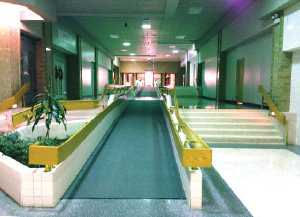
Researchers (Prohaska et al., 2009) have also found that older adults with mild cognitive disabilities prefer walking in indoor shopping malls and less in parks. This finding may be because malls’ enclosed environments, safe walking surfaces, places to rest, convenient rest rooms, and absence of traffic offer fewer distractions to those who are cognitively challenged.
Although walking is the most common and preferred activity for older adults, trends show that walking has not increased as much among older adults, particularly those with chronic conditions and disabilities, as among other age groups, (Berrigan, 2012; Kruger, Ham, Berrigan, & Ballard-Barbash, 2008; Simpson et al, 2003). Furthermore, middle-aged and older adults are among the most physically inactive segments in the United States (Pleis, Ward, & Lucas, 2010). Thus, mall walking programs possess the potential to reduce the physical activity disparity gap between younger and older age groups in the United States. In addition, becoming physically active, even during middle age and older adult years, can lead to better overall health (Vogel et al, 2009) and lower risk of death (Schnohr, Scharling, & Jensen, 2003).